
How to Set Dual Zone Thermostat in Winter

Best Dual-Zone Thermostat Settings for Winter
For most homes, the best way to set a dual-zone thermostat in winter is to start with comfortable, fairly similar temperatures in both zones, then adjust each zone gradually based on how the house actually behaves. A common winter starting point is around 68°F when occupied, but the ideal setting depends on your heating system, insulation, sun exposure, floor plan, and personal comfort.
If the upstairs naturally stays warmer because heat rises through the home, you may be able to set the upstairs zone slightly lower than the downstairs zone. Avoid making large temperature differences all at once, especially on a single HVAC system with motorized zone dampers. The system was designed to move a certain amount of air, so comfort changes should be gradual and consistent with the zoning controls and equipment.
Quick Winter Dual-Zone Thermostat Starting Point
| Situation | Practical starting point | What to watch |
|---|---|---|
| Occupied main living areas | Around 68°F if comfortable | Adjust for occupants, insulation and system performance |
| Upstairs runs naturally warmer | Try the upstairs 1-2°F lower than downstairs | Adjust one degree at a time rather than creating a large gap |
| Unused zone for several hours | Use a modest setback | Avoid extreme setbacks that create long recovery cycles |
| Sleeping hours | Use a lower setting if comfortable | Schedule recovery before occupants need the space |
| Heat-pump system | Favor steadier settings unless the thermostat is designed for heat-pump recovery | Large setbacks can cause auxiliary heat to run on some systems |
These are starting points, not universal rules. If one zone cannot reach its set temperature, overheats, short-cycles, or causes strong airflow changes when another zone closes, the issue may be with system design, dampers, sensors, ductwork, or equipment performance rather than the thermostat setting itself.
First, Know What Type of ‘Dual-Zone’ System You Have
Homeowners often use the phrase dual-zone thermostat for several different setups. Knowing which one you have makes the winter settings easier to understand.
One HVAC System With Two Zones
A true zoned forced-air system may use one furnace or heat pump, two thermostats, a zone control panel, and motorized dampers in the ductwork. Each thermostat calls for heating independently, and the control system opens or closes dampers to direct conditioned air to the zone that needs it.
Two Separate HVAC Systems
Some two-story homes have one furnace or heat pump for the lower floor and another for the upper floor. These systems can usually be scheduled more independently because each zone has its own equipment.
A Multi-Zone Ductless System
Ductless mini-split systems may have several indoor heads connected to one outdoor unit. Each indoor unit can have its own setpoint, but the controls and operating behavior are different from a conventional ducted zoning system.
If you are not sure which setup you have, check the equipment labels and thermostat controls or ask your HVAC contractor. Avoid manually closing large numbers of supply vents to create your own zones because that can change airflow and static pressure in ways the system was not designed to handle.
Should Upstairs Be Warmer or Cooler in Winter?
There is no single setting that is correct for every two-story home. Warm air tends to rise, and upper floors often receive heat from lower levels, sunlight, attic conditions, and the natural stack effect of the house. As a result, many homes find that the upstairs can be set slightly lower than the downstairs and still remain comfortable.
A good approach is to begin with both zones near the same comfortable setting. If the upstairs consistently feels too warm, lower the upstairs thermostat by one degree and give the system time to stabilize. Continue making small adjustments until the floors feel balanced.
If the upstairs is actually colder, do not force the temperature lower simply because ‘heat rises.’ Poor insulation, duct leakage, insufficient airflow, thermostat location, or an undersized heating system can override that general rule.
Should Both Thermostats Be Set to the Same Temperature?
They can be. There is nothing inherently wrong with using the same setpoint in both zones if that keeps the home comfortable. The benefit of zoning is that the temperatures can be different when occupants, schedules, or heat loads are different.
Instead of following a rule that both thermostats must always be different, use the setpoints to solve an actual comfort or scheduling need. For example, you might keep the main living area comfortable during the evening while allowing an unused upstairs zone to use a modest setback.
How Much Should You Set Back a Zone When It Is Unused?
Lowering the heating setpoint when a space is unoccupied can reduce heat loss and save energy. The U.S. Department of Energy notes that lowering a thermostat 7-10°F for eight hours a day can reduce annual heating costs in many conventional systems.
For a zoned home, however, you do not need to use the maximum setback to see a benefit. Start with a modest change and watch how quickly the zone recovers. Very large temperature differences can create long recovery periods and may not work well with every zoning design.
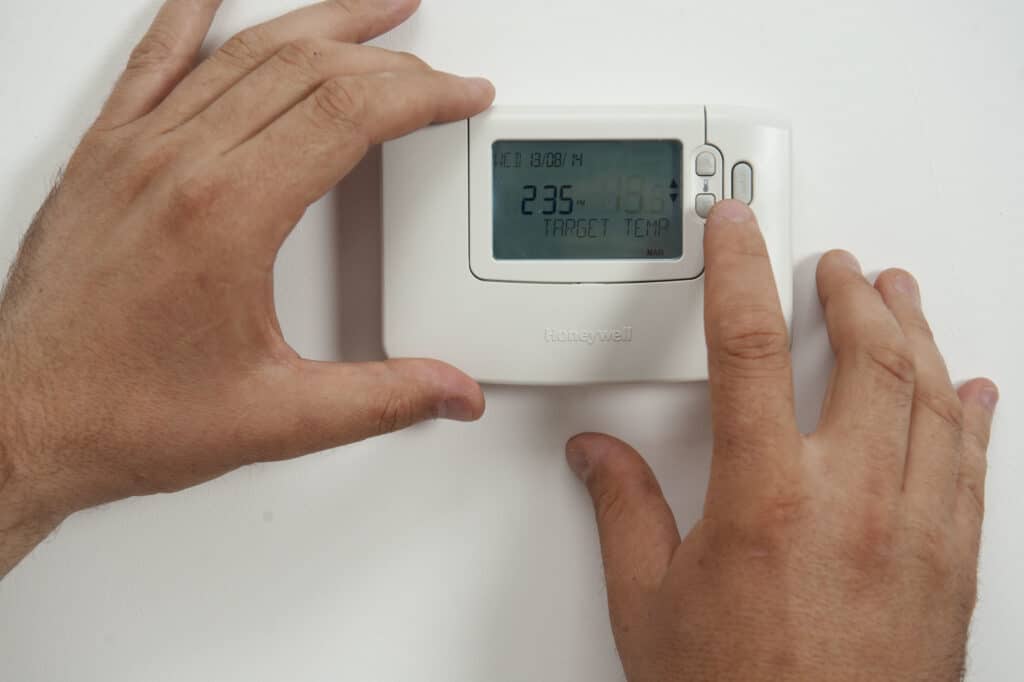
Installing a programmable dual zone thermostat in your home can be a great way to save energy, money, and time during the winter season.
Setting up this type of thermostat is simple—all you need to do is program desired settings for each zone accordingly. The dual zone thermostat will then adjust these thermostat settings at different times based on when the area of your home is most in use to ensure that you are always comfortable while also helping you save money.
By setting up your programmable thermostat correctly during the winter season, you can enjoy even temperatures throughout your home while helping reduce your electric bill.
Important Exception for Heat Pumps
If your home uses a heat pump, be cautious with aggressive winter setbacks. Some heat-pump systems use electric resistance auxiliary heat when the thermostat calls for a large temperature increase. That backup heat can cost more to operate than the heat pump itself.
A thermostat designed for heat-pump operation can manage recovery more intelligently. If you are unsure whether your thermostat is compatible with your heat pump or zoning controls, ask an HVAC professional before creating large scheduled temperature swings.
How to Program Two Zones for a Typical Winter Day
The best schedule follows how the home is actually used. A practical example might look like this:
- Morning: Bring occupied bedrooms and main living areas to the preferred comfort temperature before everyone gets up.
- Daytime: Use a modest setback in zones that are empty while keeping occupied work or living spaces comfortable.
- Evening: Return frequently used living areas to the normal occupied setting.
- Night: Lower zones that do not need full heating while keeping bedrooms at a comfortable sleep temperature.
If your smart thermostat supports occupancy sensing or geofencing, it may be able to reduce heating automatically when a zone is not in use. Make sure any smart thermostat is compatible with your specific HVAC equipment and zone control panel.
Source Image: Corgi HomePlan
Why One Zone May Stay Warmer Than the Other
Thermostat settings are only one part of a zoned system. If the temperature difference between floors is larger than expected, check for other causes.
- Thermostat location: A thermostat near sunlight, a draft, an exterior door, or a heat source can read differently from the rest of the zone.
- Insulation and air leakage: Attic, rim-joist, window, and exterior-wall conditions can make one floor lose heat faster.
- Duct leakage or poor balancing: A zone may not receive the airflow it needs.
- Dirty air filter: Restricted airflow can reduce comfort and increase system run time.
- Zone damper problem: A damper that sticks or does not open fully can leave a zone underheated.
- Sensor or thermostat problem: Incorrect readings can cause the zone to turn off too soon or run too long.
- Heating-system performance: A furnace, heat pump, blower, or control issue can show up as an apparent thermostat imbalance.
Winter Thermostat Mistakes to Avoid
- Do not assume upstairs must always be set warmer or always be set cooler. Use the home’s actual temperature pattern.
- Do not make extreme temperature differences between zones without considering system design and airflow.
- Do not close many supply registers to force heat into another zone.
- Do not use deep heat-pump setbacks unless the thermostat and system are designed to recover efficiently.
- Do not raise the thermostat far above the desired temperature to heat the zone faster. Most systems will not warm the home faster simply because the setpoint is higher.
- Do not ignore a zone that never reaches temperature. That can indicate a damper, duct, thermostat, sensor, or equipment problem.
Simple Ways to Improve Winter Comfort Without Raising the Thermostat
- Keep return grilles and supply registers clear.
- Check the HVAC filter regularly and replace it when needed.
- Seal obvious drafts around doors and windows.
- Use window coverings strategically to reduce nighttime heat loss and take advantage of daytime sun where helpful.
- Have zoning controls, dampers, airflow, and heating equipment maintained when rooms remain uneven.
- Use a compatible programmable or smart thermostat to match heating to the household schedule.
When to Call AirAce for a Zoning or Thermostat Problem
If one floor is consistently much warmer or colder than the other, the thermostat may not be the real problem. A technician can check thermostat placement, zone controls, dampers, airflow, ductwork, sensors, and heating-system operation.
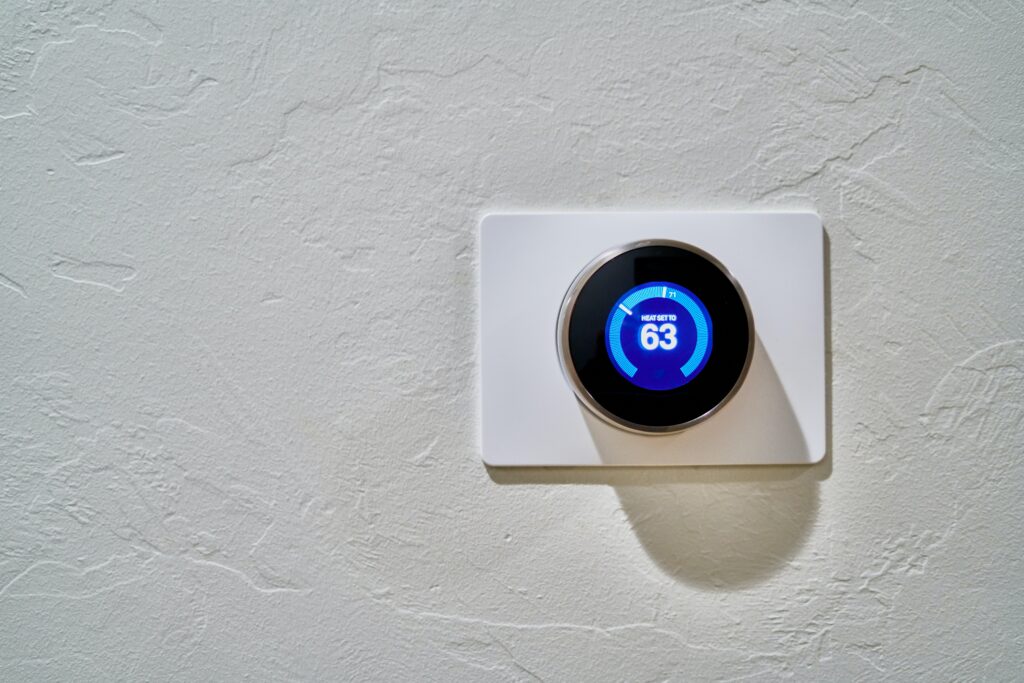
AirAce Heating & Cooling installs smart Wi-Fi thermostats and provides HVAC system design, repair and ductwork services. For heating problems in East Peoria and Central Illinois, you can also review AirAce’s Heating Repair Services or Maintenance PlanPro.
Frequently Asked Questions
Should upstairs be warmer or cooler in winter?
Many two-story homes find the upstairs stays warmer naturally, so a slightly lower upstairs setpoint can work. However, insulation, ductwork, sun exposure, and equipment design vary, so adjust based on actual room temperatures rather than a fixed rule.
Should both thermostats be set to the same temperature?
They can be. Start with similar settings if that is comfortable, then use small zone-specific adjustments for occupancy or temperature differences. Zoning gives you flexibility; it does not require different temperatures.
How many degrees apart should two zones be?
There is no universal maximum that applies to every zoning system. Start with small changes, such as one or two degrees, and avoid large differences unless the equipment manufacturer or HVAC contractor confirms the zoning system is designed for them.
Why is one zone always warmer than the other?
Possible causes include heat rising between floors, thermostat location, sunlight, insulation differences, duct leakage, airflow imbalance, a stuck zone damper, or heating-system performance. If small thermostat adjustments do not solve the problem, have the system evaluated.
Do thermostat setbacks work with heat pumps?
They can, but large winter setbacks may cause some heat pumps to use electric auxiliary heat during recovery. A heat-pump-compatible programmable or smart thermostat can help manage recovery more efficiently.
What temperature should I set my thermostat to in winter?
Around 68°F is a common energy-conscious starting point for occupied periods, but comfort needs differ. The more important goal is to use the lowest comfortable setting and reduce heating in unused periods where the system can recover efficiently.
